

Why Your Canadian Bank Declines Casino Deposits (and What Works Instead)
Here is a frustrating scenario plenty of Canadian players hit: you sign up at a properly licensed casino, go to deposit with your card, and the transaction is declined. The casino is regulated. The money is in your account. So what blocked it? Usually, your own bank.
It is a merchant code, not a moral judgment
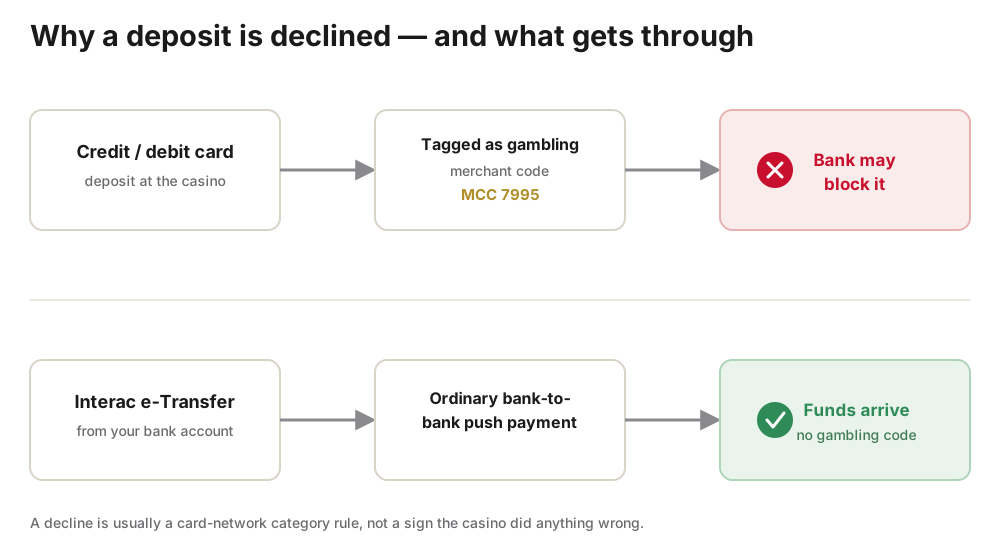
Every card transaction carries a Merchant Category Code (MCC). Online gambling sits under MCC 7995 ("betting, including lottery tickets, casino gaming chips, off-track betting and wagers"). Banks and card networks treat 7995 as a high-risk category, and some of them flag or decline it automatically based on internal policy, regardless of whether the specific operator is legal where you live.
The Big Five don't agree with each other
Canadian banks take noticeably different positions. Based on the banks' published terms and independent testing reported in 2025–2026:
| Bank | International iGaming card payments | Provincially-regulated sites |
|---|---|---|
| BMO | Generally allowed | Allowed |
| CIBC | Generally allowed | Allowed |
| RBC | May be declined | Allowed |
| Scotiabank | May be declined | Allowed |
| TD | May be declined | Allowed |
The pattern: of the Big Five, BMO and CIBC are the most permissive, while RBC, Scotiabank and TD state in their terms that international internet-gambling transactions may be declined, though all of them will process deposits to provincially-regulated operations. Policies change without notice, so treat this as a starting point and confirm with your own bank.
Why Interac e-Transfer sidesteps the block
This is the practical fix, and it is specific to how the payment works. A card deposit is a charge to a gambling-coded merchant, so it hits the MCC 7995 rules above. An Interac e-Transfer is a bank-to-bank push you authorise from your online banking. It does not run through the card network's gambling category in the same way. In reported testing, Interac deposits cleared where the same bank's card was declining gambling merchants.
If your card is declined at a licensed casino, it is usually a category rule, not a sign the casino is doing anything wrong. Interac e-Transfer is the common workaround.
Credit vs debit matters too
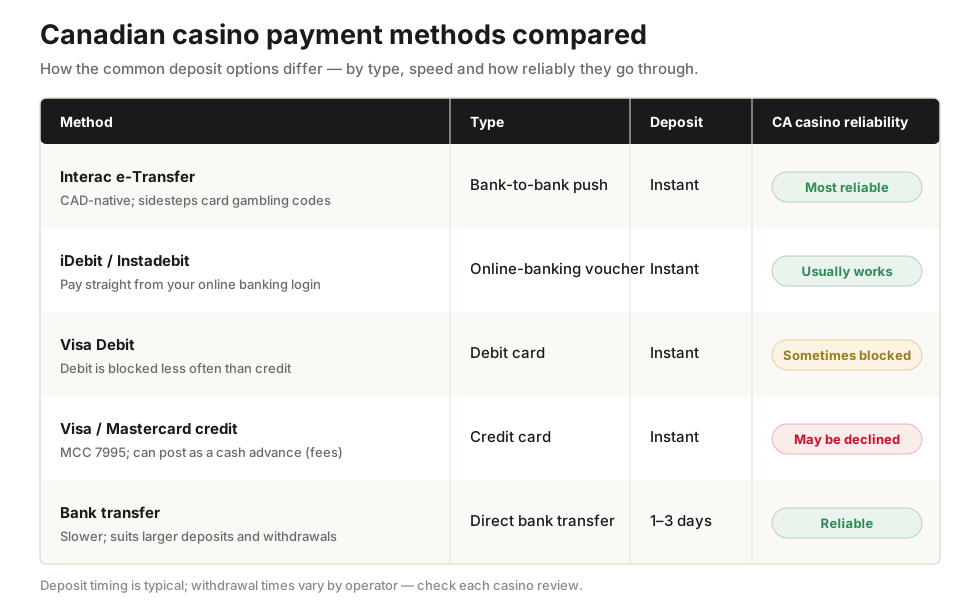
Credit cards are more likely to be blocked than debit, and some issuers treat a gambling deposit as a cash advance, which can mean immediate interest and a fee even when it does go through. If you are using plastic at all, debit generally behaves better than credit for this category.
What to do when a deposit is declined
- Switch to Interac e-Transfer. The most reliable route for Canadian players, precisely because it avoids the card-network gambling category.
- Confirm it is a bank block, not the casino. A regulated operator's cashier will usually still list the method; the decline message often comes from your bank or card issuer.
- Check you are using a regulated operator. Provincially-regulated and iGaming Ontario sites are the ones banks are most willing to process.
- Don't keep retrying the same card. Repeated declines can trigger fraud holds. Change the method instead.
- Call your bank if you want card access. Some declines are policy you cannot override; some are fraud flags a quick call can clear.
Frequently asked
Is it legal to deposit at an online casino in Canada?
In Ontario's regulated market, playing at an AGCO-registered operator is legal for adults 19+. A bank declining the card is a risk-category policy decision, not a statement that the transaction is illegal.
Why would my bank block a legal transaction?
Banks apply blanket rules to the gambling merchant category (MCC 7995) for risk reasons. Some decline international gambling charges by default while still allowing provincially-regulated ones. It is a category-level policy, not a judgment on the specific site.
Does Interac e-Transfer always work?
It is the most reliable method for Canadian players because it bypasses the card-network gambling category, but no method is universal. Limits, verification and the operator's own cashier options still apply.